
The Digital Divide in Justice 2026 Report
Consistent Progress and Persistent Challenges
The legal technology industry is moving fast — attracting capital, building new tools, and generating real excitement. But 5.1 billion people worldwide still lack meaningful access to justice, and the communities who need legal help most are consistently the last considered in the design process. JTA's newest research report maps exactly where technology is expanding access to justice, where it's making the gap worse, and what it will actually take to close it.
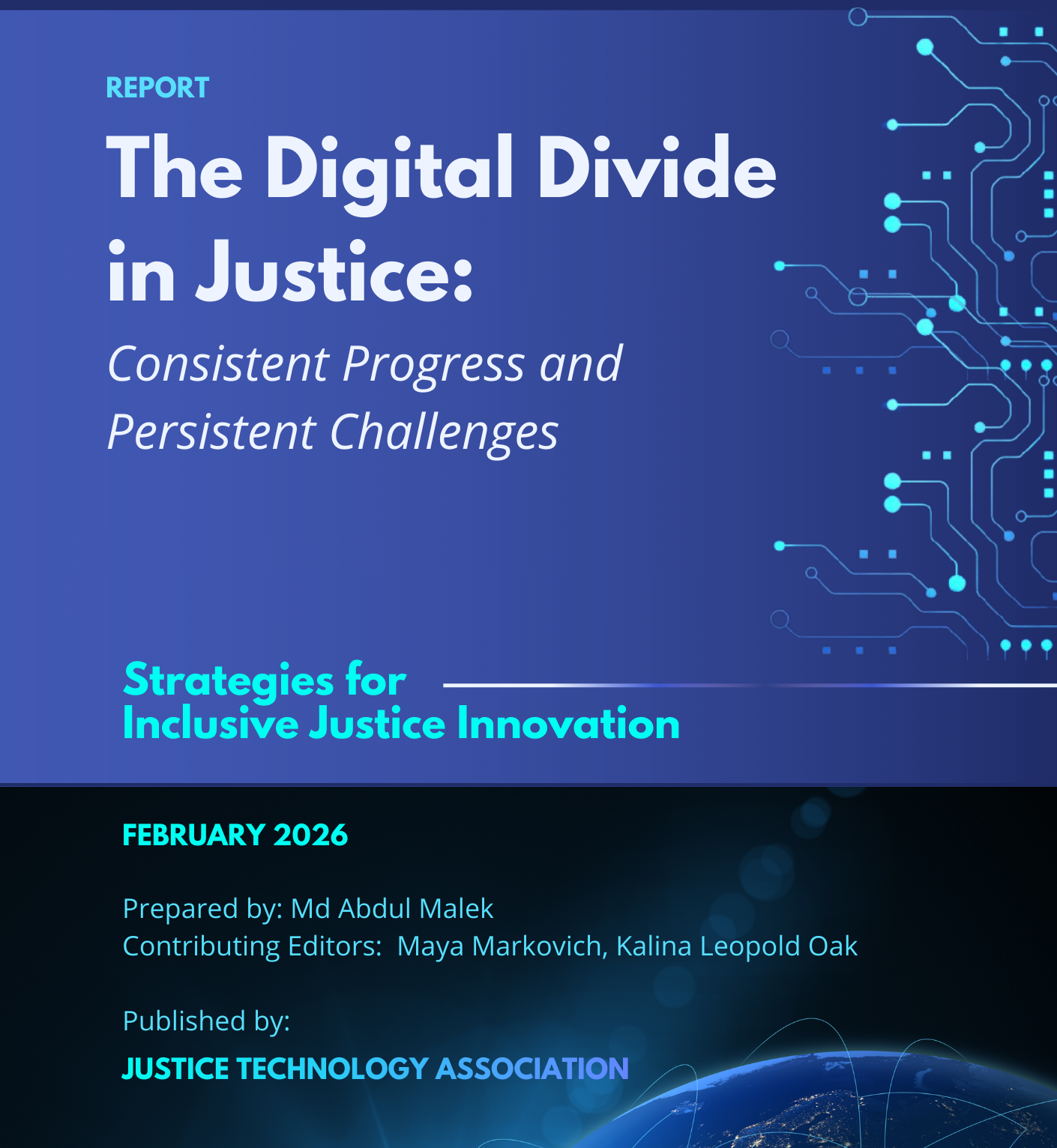
Get the Full Report
Who should read this report?
This report is essential for:
Justice tech founders & startup teams looking for data and evidence to validate their work, make the case to investors, and position their companies within a growing global movement.
Court administrators, judges & policymakers looking for concrete, actor-specific recommendations on digital infrastructure and AI disclosure.
Investors & funders exploring where capital can generate measurable, scalable impact in the justice tech sector.
Law schools & pro bono practices navigating the promise and limits of technology integration.
Anyone who believes the legal system should work for everyone.
What you'll find inside
A global analysis of the digital divide in justice — from the US to Brazil, Switzerland, and beyond.
Data on how device access, digital literacy, language barriers, and platform fragmentation compound the justice gap.
Case studies of what's working, including AI-powered legal aid tools, online dispute resolution platforms, and community partnerships.
Concrete recommendations for founders, policymakers, funders, and legal institutions.